- Regular Price
- £19.99
- Sale Price
- £19.99
- Regular Price
- £19.99
Sold Out
- Unit Price
- per

Some CHANEL pieces stop you with the buttons alone: red, emerald and sapphire-like glass glowing inside a gold-toned frame.
Gripoix is the name of a Parisian maison and its glass-making tradition—not another name for the Métiers d’Art collection. This article focuses on the coloured glass and jewellery-like buttons that transform jackets and cardigans.
Maison Gripoix was founded in Paris by Augustine Gripoix in 1869. Its signature process pours molten glass directly into a mould, using transparent, translucent and opaque effects to build depth, colour and shape.
The aim is not simply to imitate gemstones. Glass makes room for ruby red, emerald green and deep blue, as well as rounded cabochons, petals, crosses and droplets.
Gabrielle Chanel loosened the rule that fine clothes should only be worn with precious stones. She layered fine and costume jewellery, treating adornment as part of the pleasure of dressing.
Their collaboration is associated with the 1920s, with documented pieces surviving from the 1930s. Suzanne Gripoix created designs for CHANEL that recalled Byzantine and antique jewels: irregular, richly coloured and especially effective against simple clothes.
A necklace dated to about 1938 in The Metropolitan Museum of Art uses translucent red flowers within metal settings. The glass and its frame work together to create the depth that makes Gripoix distinctive.
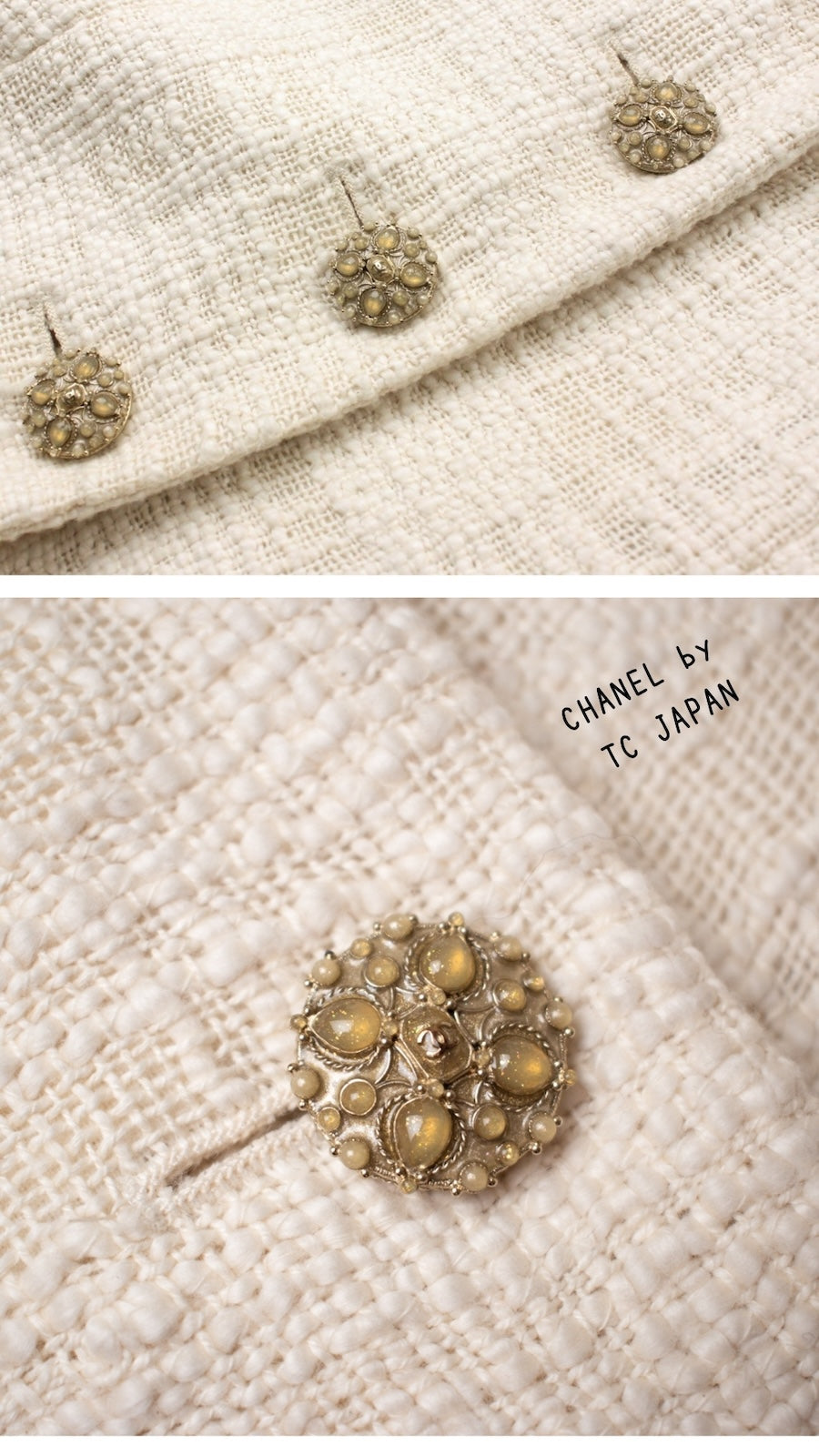
Gripoix often brings necklaces and brooches to mind, yet the buttons are just as compelling for anyone who loves CHANEL clothing.
Tweed already carries complex yarns and texture. Add translucent glass and a gold-toned frame, and the light changes with every angle. Closed, the buttons form a vertical rhythm; worn open, they become small pieces of jewellery near the neckline.
On a cardigan, soft knitwear contrasts with substantial jewel buttons. On a suit, the motif may repeat across the front and cuffs, reducing the need for additional accessories.
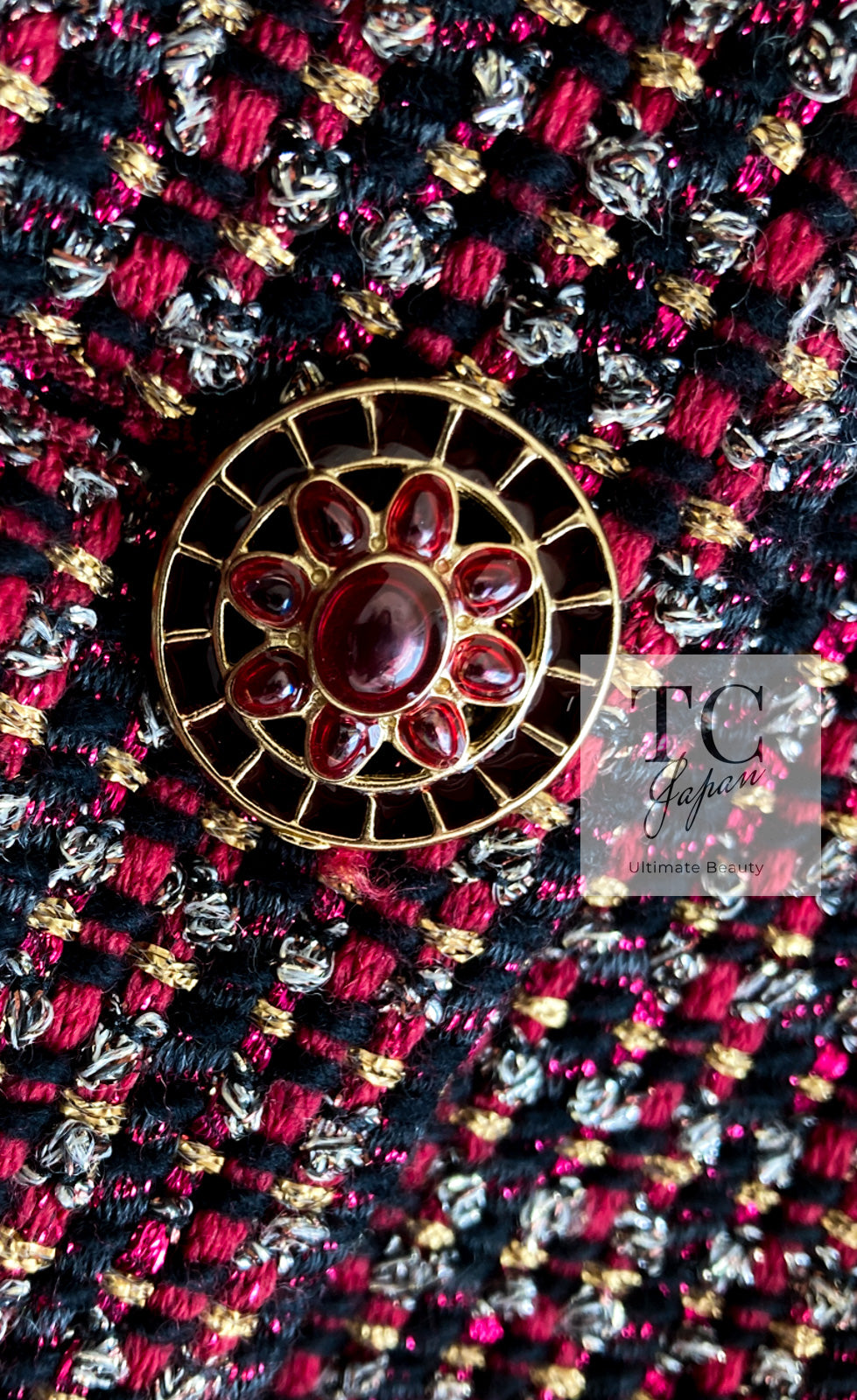
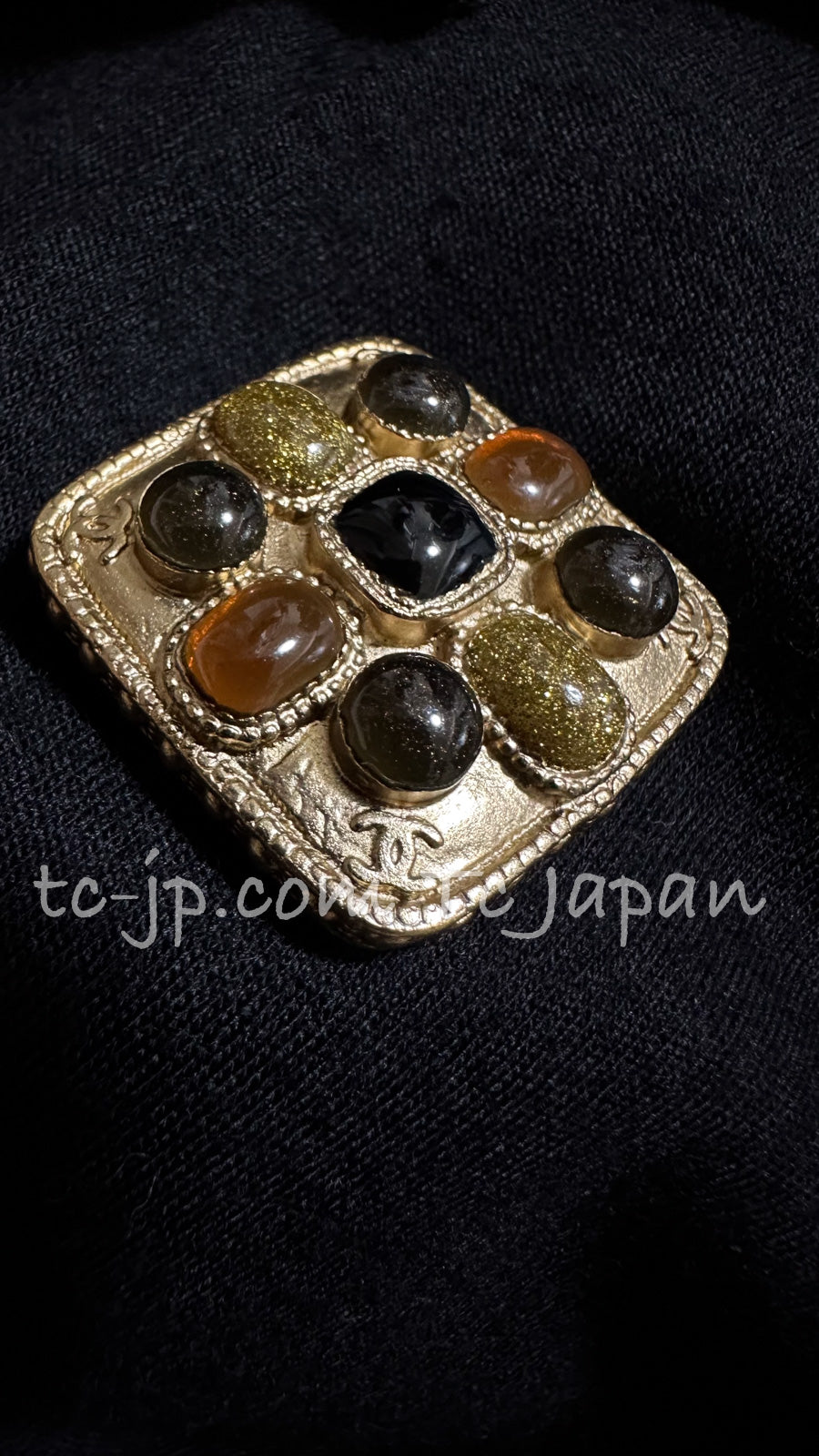
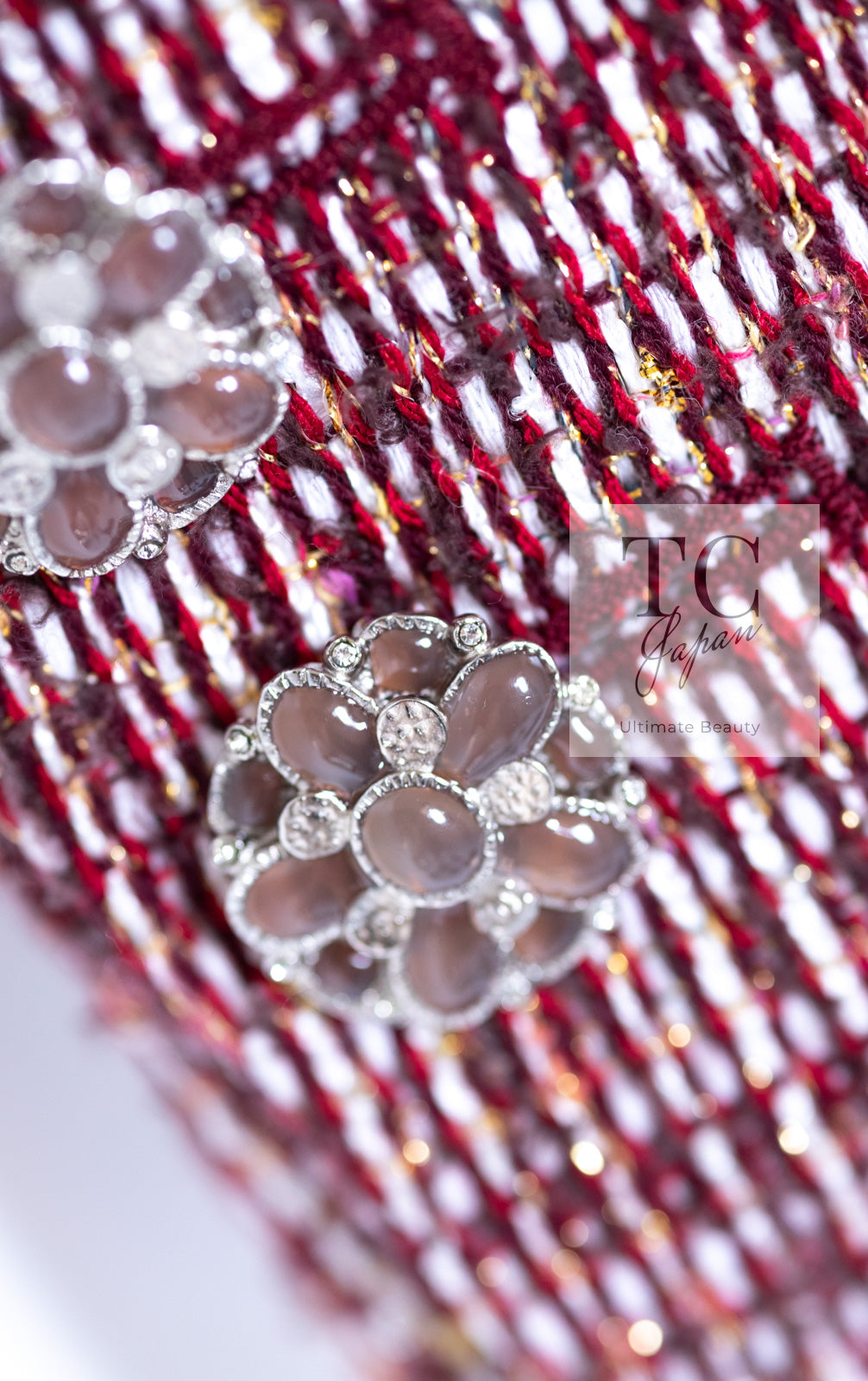
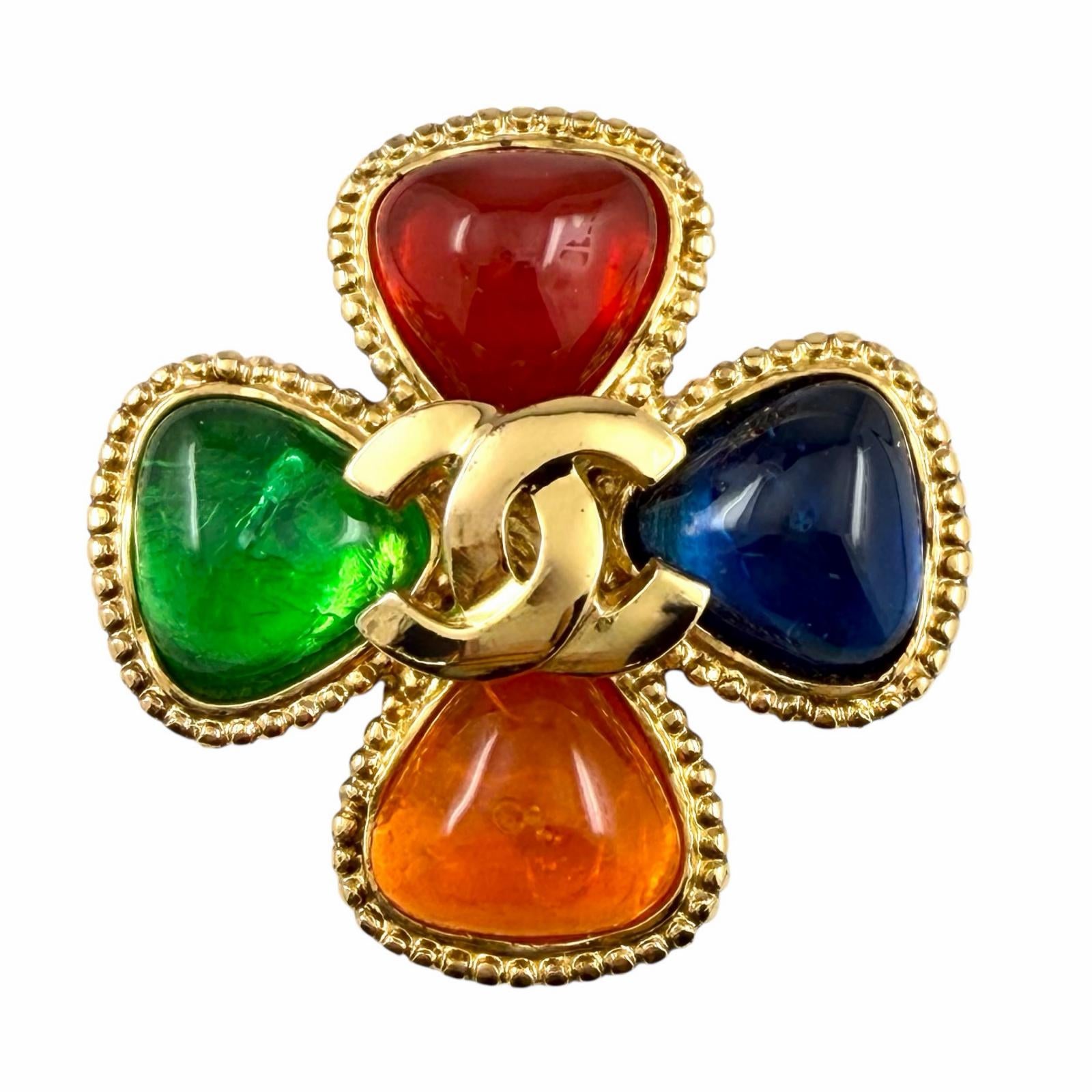
Not every coloured, gemstone-like CHANEL button can be identified as Maison Gripoix work. Period, documentation, stamps, product descriptions and present condition all need to be considered together.
“Older is always better” and “Gripoix always rises in value” are not reliable rules. Design, completeness, glass and metal condition, and the condition of the garment all affect how a piece should be assessed.
Gripoix Paris has discussed restoring jewellery more than 50 years old, but the repairability of buttons attached to clothing varies piece by piece. Current photographs remain the most useful starting point.
Seeing the workshop is more immediate than reading that glass is poured into a mould. The film shows coloured glass meeting metal settings and becoming jewellery.
A 2014 documentary shared by Gripoix Paris, showing glass, settings and assembly.
This film is not limited to Gripoix, but the curator handles CHANEL necklaces, brooches and earrings at close range. Their thickness, chain layers and colour combinations reveal how jewellery completes the clothes.
V&A, “Handling CHANEL jewellery”: a close view of volume, sound and construction.
When the buttons already behave like jewellery, the rest of the styling can be quieter. This gives the glass colour more space.
The same idea works with a dress and cardigan: treat the buttons as jewellery already sewn into the garment.
0 Item(s)